How to Make Shared Cooking Feel Like Cooking Together
Shared cooking works better when each person can contribute at their own pace. Use clear task choices and simple handoffs to bring the meal together.

Shared cooking works best when people can join the meal at different levels of effort. One friend might chop vegetables, another might stir a pot, and someone else can set out bowls. The useful trick is to make contributions easy to choose and easy to pass along, without turning dinner into a shift schedule.
Why does shared cooking need more than assigned jobs?
A list of jobs can keep a kitchen moving, but it can also make a gathering feel like a work party. People arrive with different energy, skills, and interest in cooking. A good plan leaves room for those differences instead of treating every guest as a spare pair of hands.
Think in terms of invitations, not assignments. “Would you rather chop herbs or set the table?” gives someone a choice. “Can you help?” often leaves the guest guessing what would actually be useful.
How can guests choose a comfortable contribution?
Offer a few tasks with distinct levels of attention. Washing lettuce, tearing herbs, and filling a water pitcher are easy to pause. Stirring a sauce or watching a pan calls for someone who is comfortable staying nearby. Let guests choose, and make it clear that sitting out is also fine.
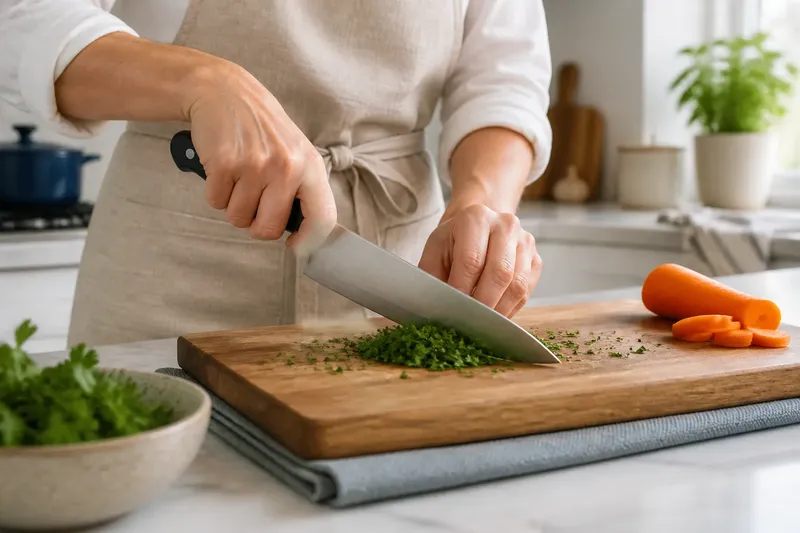
Make each invitation concrete: name the ingredient, the action, and where the finished result goes. “Pull the parsley leaves into this bowl” is easier to start than “take care of the garnish.” If someone wants to learn a cooking technique, explain it; if not, keep the request simple.
- Check whether a guest wants to cook; if yes, offer a choice of tasks, and if no, leave them free to relax or socialize.
- Check whether a task needs constant attention; if yes, offer it to someone comfortable with that role, and if no, make it available as a casual contribution.
- Check whether a guest knows how to use a tool; if yes, point out the ingredient and destination, and if no, demonstrate or choose a simpler task.
- Check whether someone has already started a job; if yes, ask before taking over, and if no, offer to handle it or let another person choose it.
- Check whether a contribution can wait; if yes, let the guest complete it at a comfortable pace, and if no, ask someone who is ready to act.
- Check whether the work is becoming crowded; if yes, invite one person to take a social or serving role, and if no, let the cooks continue together.
How can handoffs feel natural rather than managerial?
A handoff is simply a clear moment when someone passes a task to another person. Say what is done, what still needs attention, and where the work stands. “The carrots are cut and on the tray; they still need oil” gives the next cook enough context without a briefing.
Ask before changing someone’s plan. If the person stirring a pot wants a break, offer to take over and ask what they are watching for. If a dish is delayed, consider a small adjustment—such as serving a ready salad first—rather than quietly redirecting another guest.
Imagine you are making beans, roasted carrots, and a green salad with two friends. One friend chooses to wash the greens, another agrees to cut the carrots, and you start the beans. The greens are ready while the carrots still need cutting, so the first friend can set out plates or take a break; you can then explain the beans’ progress before the second friend takes a turn away from the board. The expected result is a meal that keeps moving while each person can choose whether to continue, pause, or switch tasks.
What helps shared cooking stay enjoyable?
Let conversation remain part of the activity. A guest who is not holding a knife can tell a story, taste a dish when invited, or simply keep the cook company. Not every pause needs to be filled with another chore.
Keep optional finishing touches optional. Fresh herbs, a carefully arranged platter, or an extra side may be welcome, but they should not become obligations. If the group is tired or dinner is ready, serve the food as it is.
What do people ask about shared cooking?
How can a non-cook join in?
Offer an easy choice such as setting out plates, washing herbs, or filling a pitcher. Explain where the finished item belongs, then let the guest complete the task at their own pace.
What if two people want to do the same task?
Ask whether they would enjoy working together or prefer another option. They can share a task such as tearing lettuce, or one can choose a different contribution like arranging serving dishes.
How do you keep dinner from feeling like an obligation?
Make participation voluntary and offer breaks without fuss. A guest who declines a task can still be part of the gathering.
What if a dish is running late?
Choose a modest adjustment: serve another ready dish first, skip an optional garnish, or ask whether someone wants to take over a clearly explained task. Avoid piling new requests onto the whole group.
How can the evening end on a shared note?
Invite people to help with serving or cleanup, but do not assume everyone wants the same role after dinner. One person may carry plates while another prefers to pack leftovers; someone else may be ready to sit down. Ask, accept the answer, and let the gathering take precedence over a perfectly cleared kitchen.
For your next shared cooking evening, offer a few specific ways to join in and let guests decide how much they want to do. A clear invitation, a considerate handoff, and permission to pause can make the meal feel genuinely shared, even when people contribute differently.