Open Shelves or Closed Cupboards for Everyday Cookware?
Open shelves or closed cupboards for everyday cookware? Compare access, dust and visual calm to choose storage that fits your cooking habits.
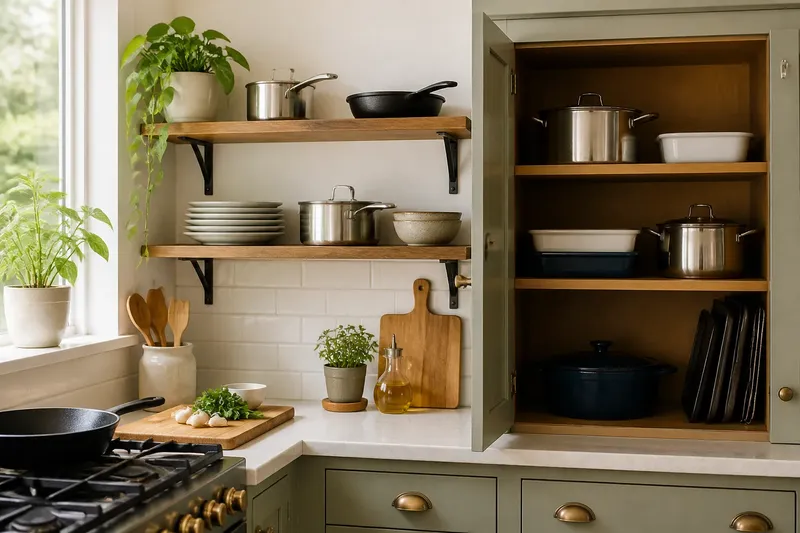
Open shelves or closed cupboards for everyday cookware? Choose based on what you reach for, how often you cook, and how much visual activity you want in the room. A skillet used most mornings may earn an easy-to-grab spot; a stack of specialty pans used now and then may be better behind a door.
The choice is not all-or-nothing. Many kitchens work best with a small, deliberate stretch of open storage for frequently used pieces and cupboards for everything else. Think of storage as part of the cooking route: where your hands go, what stays clean, and what you want to see when you enter the room.
Which cookware belongs on open shelves?
Open shelves suit durable items you use often and do not mind seeing every day. A cast-iron skillet, a stainless-steel saucepan, or a neat stack of everyday plates can be practical candidates, provided the shelf is close to where you cook and the pieces are easy to lift down.
Visibility can make a regular routine feel simpler: you can scan the shelf and spot the pan you need without opening several doors. It can also help you notice when a favorite piece is still drying or has not been returned to its place. That advantage fades if the shelf becomes a catchall for lids, spare utensils, and cookware that has no clear home.
Consider the object as well as the habit. A light pot with a stable base is easier to retrieve than a heavy Dutch oven perched above shoulder level. Bulky pieces, loose lids, and pans with delicate finishes may be awkward or unattractive on display. Keep the arrangement small enough that you can put each item back without rearranging the shelf.
What should stay behind cupboard doors?
Closed cupboards are a strong choice for cookware you use occasionally, pieces with loose parts, and items you would rather not keep in view. A lidded stockpot, a baking dish, or a collection of mismatched pans can stay accessible without becoming part of the room’s daily picture.
Doors also limit exposure to airborne dust and cooking residue. This matters most for items that sit unused for stretches, especially if they are stored near a range or in a room where frying and roasting are frequent. A closed cupboard does not remove the need to clean cookware before use, but it can reduce the amount of open-surface cleaning that storage requires.
There is a practical tradeoff: a cupboard hides the contents, so an overcrowded interior can make the pan you want harder to find. Keep the cookware you use together, and avoid stacking so high that the bottom piece becomes a chore to reach. If a door swings into a busy path, check whether its position makes retrieval inconvenient during meal preparation.
How much dust and grease will open shelves collect?
Open shelves collect whatever settles in the kitchen air, and shelves near cooking activity may also pick up a fine film of grease. The amount depends on the room’s layout, ventilation, cooking habits, and how long an item sits untouched. A frequently used pan may be washed before its next use anyway; a decorative serving pot may gather a visible coating before you need it.
Placement helps. An open shelf farther from the range is less exposed to splatter than one directly beside it, and a well-used item is less likely to sit undisturbed for long. Still, the shelf itself needs routine wiping, and cookware may need a rinse or wash before cooking if dust has settled on its surface.
For a simple decision, ask whether you would reach for the item often enough to justify keeping it exposed. If the answer is no, a cupboard is usually the lower-maintenance home. If you love the open look but dislike cleaning, reserve shelves for a few pieces you use regularly rather than lining the whole wall with seldom-used cookware.
How can you keep open shelves from looking cluttered?
Limit the shelf to a small group of items with a clear purpose. Similar shapes or finishes can make a collection feel orderly, but matching cookware is not required; spacing and a consistent place for each piece often matter more. Leave room to lift an item down without knocking neighboring pans.
Say you cook eggs most mornings and use a saucepan for oatmeal, but bring out a roasting pan only for occasional dinners. Imagine placing the skillet and saucepan on one open shelf near the prep area, while storing the roasting pan and its rack behind a cupboard door. The expected observable result is that the daily pans are easy to spot, while the larger, less-used pieces no longer crowd the visible shelf.
Do not turn a shelf into a display that interferes with the task. A row of pans can look tidy yet be hard to use if handles overlap or the cookware is too heavy to lift safely from its position. Keep heavier pieces lower and within comfortable reach, and leave the most convenient place for the cookware you actually use most.
Which option works better in a small kitchen?
Neither option automatically saves more usable space; the answer depends on the available wall area, cupboard interiors, and how the doors or shelves affect movement. Open shelves can free cupboard space, but they consume visible wall area and need a clear arrangement. Cupboards keep walls visually quieter, though deep or crowded interiors may hide useful space behind stacked cookware.
Look at the route between storage, sink, and cooking area. If a pan can be taken from a shelf and carried directly to the range without crossing a busy walkway, open storage may feel convenient. If a cupboard door would block that route, try a different cabinet or consider a limited shelf for the items that cause the most reaching and searching.
For renters or anyone changing a room without major work, freestanding options can help test the storage pattern. A sturdy cart or an existing low shelf can hold a few everyday items while you see whether open access suits your routine. Keep heavy cookware low and stable; do not treat a decorative or lightly built shelf as a safe place for heavy pots.
What should you ask before choosing?
Does cookware need to be washed before use on an open shelf?
If dust or kitchen residue has settled on a piece, wash or rinse it before cooking. Items stored behind cupboard doors can also need cleaning, particularly after a long period without use.
Are open shelves harder to keep tidy?
They make disorder visible, so a shelf with too many shapes, loose lids, or overflow items can look busy. Keeping only a few regular-use pieces there makes the arrangement easier to maintain.
Can heavy cookware go on an open shelf?
Only use a shelf designed and installed for the load, and place heavy items where you can lift them comfortably. For the shelf’s capacity and installation details, follow the manufacturer’s instructions and any applicable local requirements.
Can I combine open shelves and cupboards?
Yes. A mixed arrangement lets you reserve visible storage for cookware you reach for often and use closed storage for the rest. It also gives you room to adjust if your habits change.
How do you choose the right balance?
Start with the cookware you reach for most, not the pieces that look best in a photograph. Notice which pans appear in your regular meals, which ones are awkward to lift, and which could sit unused for weeks. Put the everyday group where access is easy, then choose open or closed storage according to how much exposure and visual activity you are comfortable managing.
Open shelves or closed cupboards for everyday cookware is a choice about routine as much as appearance. A modest open shelf can make frequent tools visible and convenient; cupboards can protect the room’s visual calm and keep infrequently used pieces out of the way. The most useful arrangement is the one that lets you take a pan down, cook, clean it, and return it without turning storage into another task.